Four motors, five seats, 1,035 hp and a price of 550,000 euros: Ferrari's first electric car drew harsh criticism and a sold-out order book.
The Ferrari Luce is Ferrari's first production electric car and its first five-seater, with four motors producing 1,035 hp according to Car and Driver. Reuters reports a 550,000 euro price in Europe, with handovers starting late in 2026, and Ferrari's whole 2026 run is already sold out.
The day after Ferrari unveiled its first electric car, the company's shares fell 8.4%. Three days later they had recovered, the 2026 production run of the Luce had sold out, and the first car off the line went on to fetch USD 40 million at auction.
What is the Ferrari Luce?
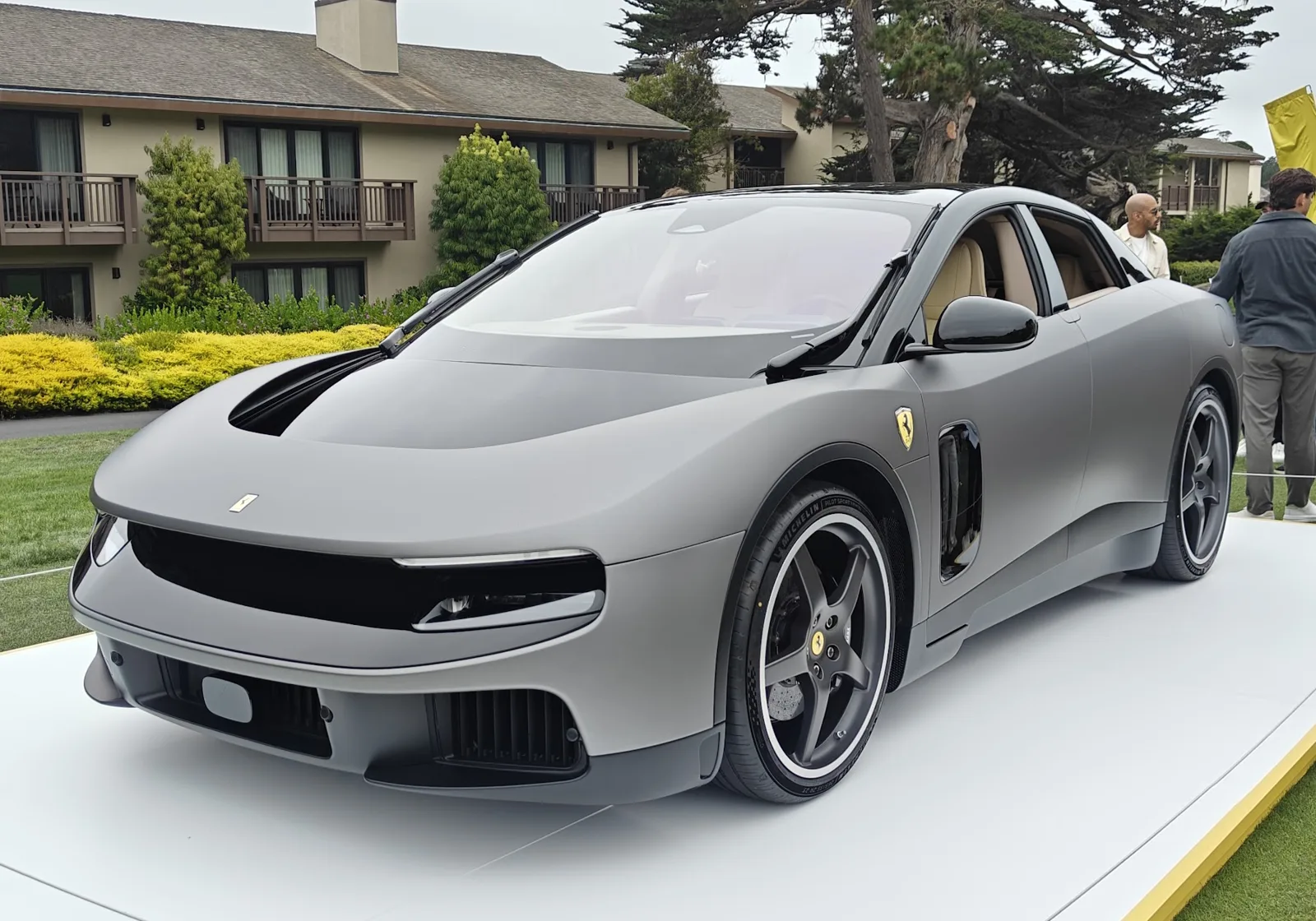
The Ferrari Luce, Type F222, is a battery electric executive car. It is the first Ferrari built for series production with batteries alone, and the first with room for five people. Luce means "light" in Italian. Ferrari previewed it as Elettrica on 9 October 2025, and the finished car was unveiled on Monday 25 May 2026.
The reveal was carefully staged. About 200 journalists were invited to a tightly controlled event at the Vela di Calatrava, a sports complex outside Rome. The car is assembled in Maranello, the town to which the company moved its factory in 1943 under threat of Allied bombing, on a platform designed from the outset for electric power rather than adapted from a combustion-engine car.
It joins a range that already spans several supercars, grand tourers and a single SUV, and Car and Driver measured it against that SUV, the Purosangue.
The car was criticised by fans and by a former Ferrari chief executive, yet the 2026 production run sold out.
How does the Luce's powertrain work?
Each wheel has its own permanent-magnet electric motor. Car and Driver gives the total output as 1,035 hp (772 kW; 1,049 PS), with the weight of the effort placed at the back: the front pair delivers 282 hp (210 kW) and the rear pair 831 hp (620 kW).
Added together, the front and rear figures come to more than the 1,035 hp system total.
A motor at every corner makes torque vectoring possible, meaning the car can decide how much push each wheel receives. Think of a four-person rowing crew in which every rower can change the strength of the stroke on the fly: the boat turns through a bend partly because of how the effort is shared out. The Luce adds active suspension and four-wheel steering to that same job.
The battery is part of the structure. At 122 kWh gross, it is a load-bearing piece of the chassis, so it acts as part of the car's skeleton rather than as a heavy box slung underneath. The electrical system runs at 800 V and can take DC fast charging at a rate of up to 350 kW. Reuters quoted a range above 500 km (311 mi).
Luce performance figures
| Measure | Figure | Attributed to |
|---|---|---|
| Combined output | 1,035 hp (772 kW; 1,049 PS) | Car and Driver |
| Front motors | 282 hp (210 kW) | Car and Driver |
| Rear motors | 831 hp (620 kW) | Car and Driver |
| 0-100 km/h | 2.5 seconds | Ferrari claim |
| Top speed | More than 310 km/h (193 mph) | Ferrari claim |
| Battery | 122 kWh gross, 800 V | Ferrari |
| Fast charging | Up to 350 kW DC | Ferrari |
| Range | Over 500 km (311 mi) | Reuters |
What does the first electric Ferrari look like?
Inside and out, the styling came from a collaboration between Ferrari's in-house designers and engineers and LoveFrom, the studio set up by Jony Ive and Marc Newson. Car and Driver saw a car lower and longer than the Purosangue, with doors that open from the centre, a hatch at the back, a cabin pushed well forward and lamps set into dark panels.
The cabin pairs OLED screens with real controls. A central touchscreen shares the dashboard with physical switchgear. On the wheel, ordinary switches replace the touch-sensitive pads used on some recent Ferraris, and a pair of manettino dials sit within reach, one for chassis dynamics and the other for the electric drive. Paddles behind the wheel adjust regenerative braking and the delivery of torque.
How does an electric Ferrari sound?
Ferrari's engineers built a system that picks up the physical noises of the electric drivetrain and boosts them to suit the chosen drive mode. No recording of a combustion engine is played. The sound comes from the car's own components, and it changes with the mode selected.
For buyers who love engine noise, that is the central question, and it can only be answered on the road. The approach is a declared alternative to faking a petrol soundtrack, and how convincing it feels will be judged by the first owners.
How much does the Luce cost and when does it arrive?
Reuters gave a European price of 550,000 euros, and says handovers start in the closing quarter of 2026. In China the car went on sale on 27 June 2026; 88 cars were offered and every one was taken. That is a market where European brands are seen as having a hard time.
The whole of the 2026 production run is spoken for. At the 2026 Monterey Car Week, American businessman Herbert Wertheim won an RM Sotheby's auction for the first production car, known as Chassis 0, with a bid of USD 40 million. That made the Luce the most expensive electric vehicle, the most expensive new car and the priciest charity car ever sold at any auction.
Ferrari has listed Euro NCAP assessment among the car's targets. If it goes ahead, the Luce could become the first Ferrari the programme has tested, and the costliest vehicle it has put through crash trials.
What should a buyer weigh up?
On paper the Luce offers five seats, a rear hatch for luggage, a range above 500 km and charging at up to 350 kW. Ferrari claims 0-100 km/h in 2.5 seconds. Against that stand the 550,000 euro price and a delivery slot that opens only in late 2026.
The interior choices matter to daily use. Physical switches and dials sit beside the touchscreen, and the electric drive has its own manettino, so the character of the car can be changed without opening a menu. Regenerative braking is set from the paddles.
Why did so many people dislike it?
A cool response followed the reveal, with most of the argument about appearance and about what an electric Ferrari means for the badge. The Guardian called the look divisive, and analysts quoted there asked whether a body shaped like a saloon fits the sports-car image the company has built.
Fans were blunter, many calling the car unworthy of the name. Dezeen published a podcast asking why everyone seemed to hate the new electric Ferrari. Luca di Montezemolo, who once ran the company, was equally blunt in his dislike of the styling. Expectations may have played a part: some fans had been hoping for something closer to the Ferrari F76, a digital hypercar that exists only as an NFT.
The market told a different story. The shares dipped and recovered, the production run sold out and, as the first car's auction showed, buyers were willing to pay large sums. Pope Leo XIV was even shown around a Luce the day after the reveal.
Where did Ferrari come from?
Enzo Ferrari, a salesman and racing driver for Alfa Romeo, founded the racing team Scuderia Ferrari in 1929 to serve gentleman drivers and other amateurs. After Alfa Romeo withdrew from racing in 1933, the team became its unofficial representative on the track. It was liquidated in 1937, and Enzo left Alfa Romeo in 1939 following disagreements with management.
He used his settlement to start a firm called Auto Avio Costruzioni, which could not use the Ferrari name for four years because of a noncompete agreement. It produced a single car before the Second World War, then made aircraft engines and machine tools for the Italian military, work that brought in a great deal of capital. The company took the Ferrari name in 1945, and its first car, the 125 S, was powered by a new V12 engine and won many races in 1947.
The company became public in 1960 and was a subsidiary of Fiat from 1963 to 2014; Fiat bought 50% of the shares in 1969 and expanded its stake to 90% after Enzo's death in 1988. Ferrari was spun off in 2016. Today Piero Ferrari and the investment company Exor are significant shareholders, and the firm was valued at approximately US$85.5 billion in May 2023.
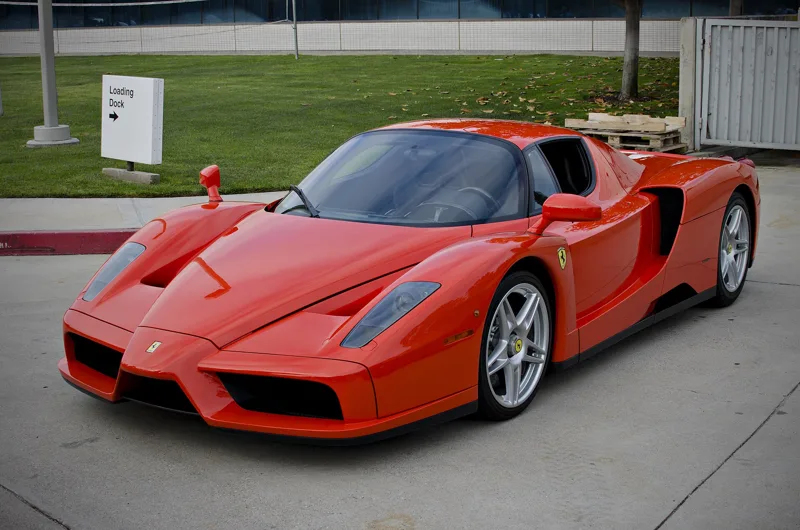
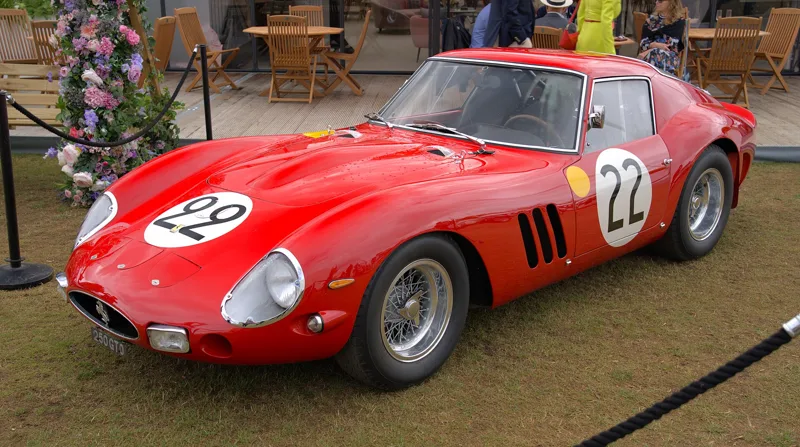
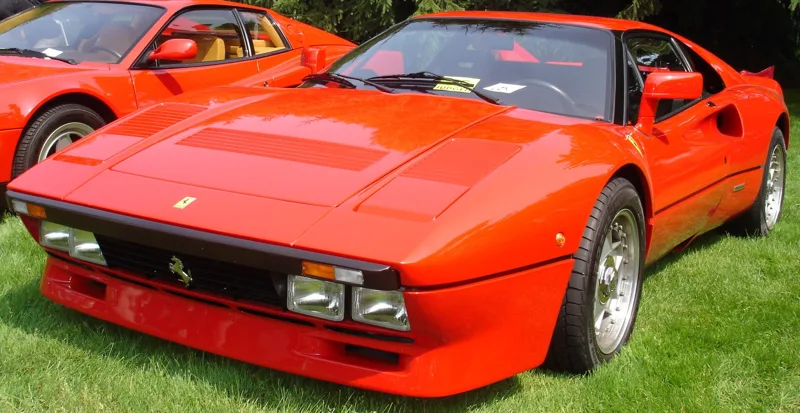
Flagship supercars have marked each era since. The last car Enzo personally approved was the F40, which expanded on the approach first tried with the 288 GTO four years earlier, and the Montezemolo years added the F50, the Enzo and the LaFerrari. Ferrari first approached Ford about a manufacturing partner in 1963, though talks fell through, before settling on Fiat.
Is this the first time Ferrari has broken with its past?
The company has changed direction before. Its road cars once all carried a V12 in the front, but the 1967 Dino 206 GT, its first mass-produced mid-engined road car, was a decisive break from that conservative engineering approach, and in the 1970s and 1980s Ferrari fully embraced mid-engine layouts and V6 and V8 engines.
Management has reshaped the business as well. Under Luca di Montezemolo, chairman from 1991 to 2014, road-car profitability rose nearly tenfold as the range widened and total output was limited. Benedetto Vigna replaced Louis Camilleri as chief executive in 2021 and has spoken of building Ferrari's first all-electric model. The Luce is the first production electric Ferrari.
What do Ferrari's loyal fans value?
Racing, above all. Scuderia Ferrari has taken part in Formula One since the series began, and has fielded fifteen champion drivers and won sixteen Constructors' Championships, and it holds more race victories and podiums than any other team. Its first Grand Prix victory came at the 1951 British Grand Prix, and Michael Schumacher delivered five straight drivers' titles from 2000 to 2004. Its supporters, the tifosi, are known for passion and loyalty.
In sports cars, the 125 S took six wins from ten starts in 1947, and by 1957 Ferrari had three World Sportscar Championships, seven Mille Miglia wins and two victories at Le Mans. After a long break, it returned to prototype racing in 2023 with the 499P, which won Le Mans in 2023 and 2024 and helped secure the Manufacturers' and Drivers' titles in the 2025 World Endurance Championship. Since 1993 the one-make Ferrari Challenge has been based on the road range.
Where this goes next
The near-term plans are specific. First deliveries to customers fall in the final quarter of 2026, and crash testing by Euro NCAP is a stated aim.
What remains to be seen is whether the early demand holds once owners are driving their cars and the sound, the range and the performance can be judged against Ferrari's claims.