Built on a shortened Fiat 128 from 1980 to 2008, the Yugo sold more than 794,000 cars and then became one of the most mocked cars of its era in America.
The Yugo was a subcompact hatchback made by Zastava Automobiles from 1980 to 2008, originally designed as a shortened Fiat 128. More than 794,000 were built, and about 141,651 were sold in the United States between 1985 and 1992. It is remembered as one of the most criticised cars of its era.
The Zastava Yugo was a subcompact hatchback built in Yugoslavia from 1980 until 2008, based on a shortened Fiat 128. It sold more than 794,000 cars at home and abroad, but it is remembered above all for its American chapter. Its story combines engineering compromise, political upheaval and one of the most ridiculed sales campaigns in motoring history.
Where did the Yugo come from?
Zastava was founded as an arms manufacturer in 1853, and it moved into vehicles in the late 1930s. After the war it built cars under licence from Fiat, starting with passenger models on 26 August 1953. By the time the Yugo was designed, the entry-level Zastava 750 was clearly outdated.
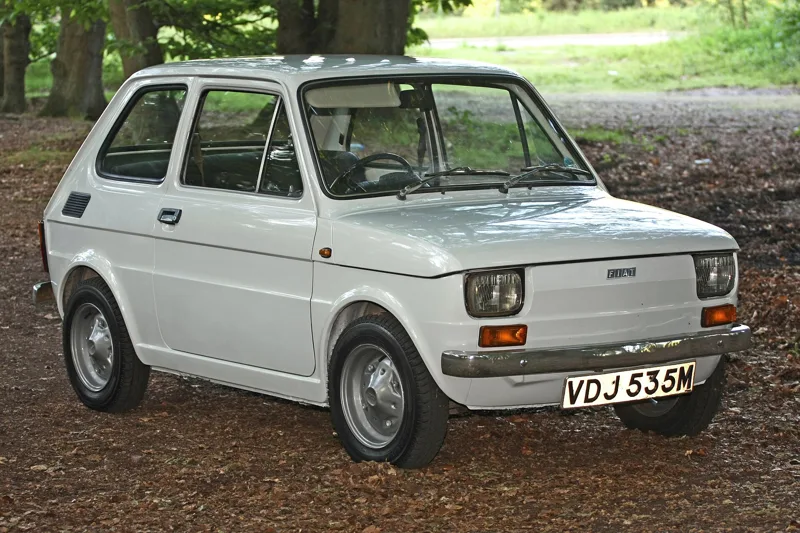
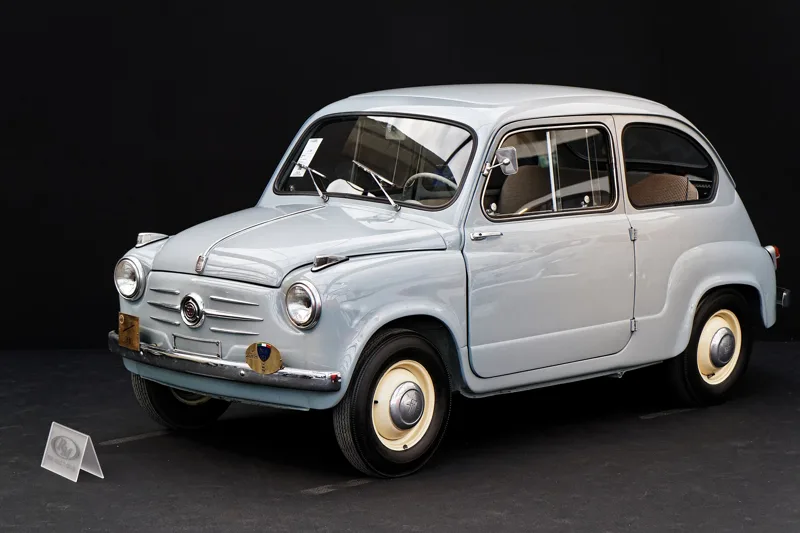
The Zastava 750 was an updated rear-engined Fiat 600, built from 1962 to 1985. The most popular model was the Zastava 101, a hatchback version of the Fiat 128, and the Yugo was built on that foundation. The first Yugo prototype was built on 2 October 1978 and was reportedly given to President Josip Broz Tito.
Zastava introduced the car on its own initiative in 1980, first as the Zastava Jugo 45. Series production officially started on 28 November 1980. The Yugo and the 750 were built side by side until 1985, when the older model finally ended.
A cheap Fiat-derived hatchback that sold 141,651 cars in America before becoming a television and film punchline.
How was the Yugo engineered?
The Yugo was a shorter version of Zastava's 128-based cars, and its model numbers referred to the maximum power of each engine. The base 903 cc unit made 45 hp (33 kW), while the 1.1-litre engine, taken from the Zastava 101, made 55 hp and the 1.3-litre made 65 hp.
Early cars used carburettors, but fuel injection arrived in the 1980s on the GVX-EFI, which was called the Koral 65. Its Motronic MP3.1 system was later upgraded by Bosch to Motronic M4.6 MPI on the 1.1 and 1.3 engines. Injected cars also had a three-way catalytic converter and a lambda sensor.
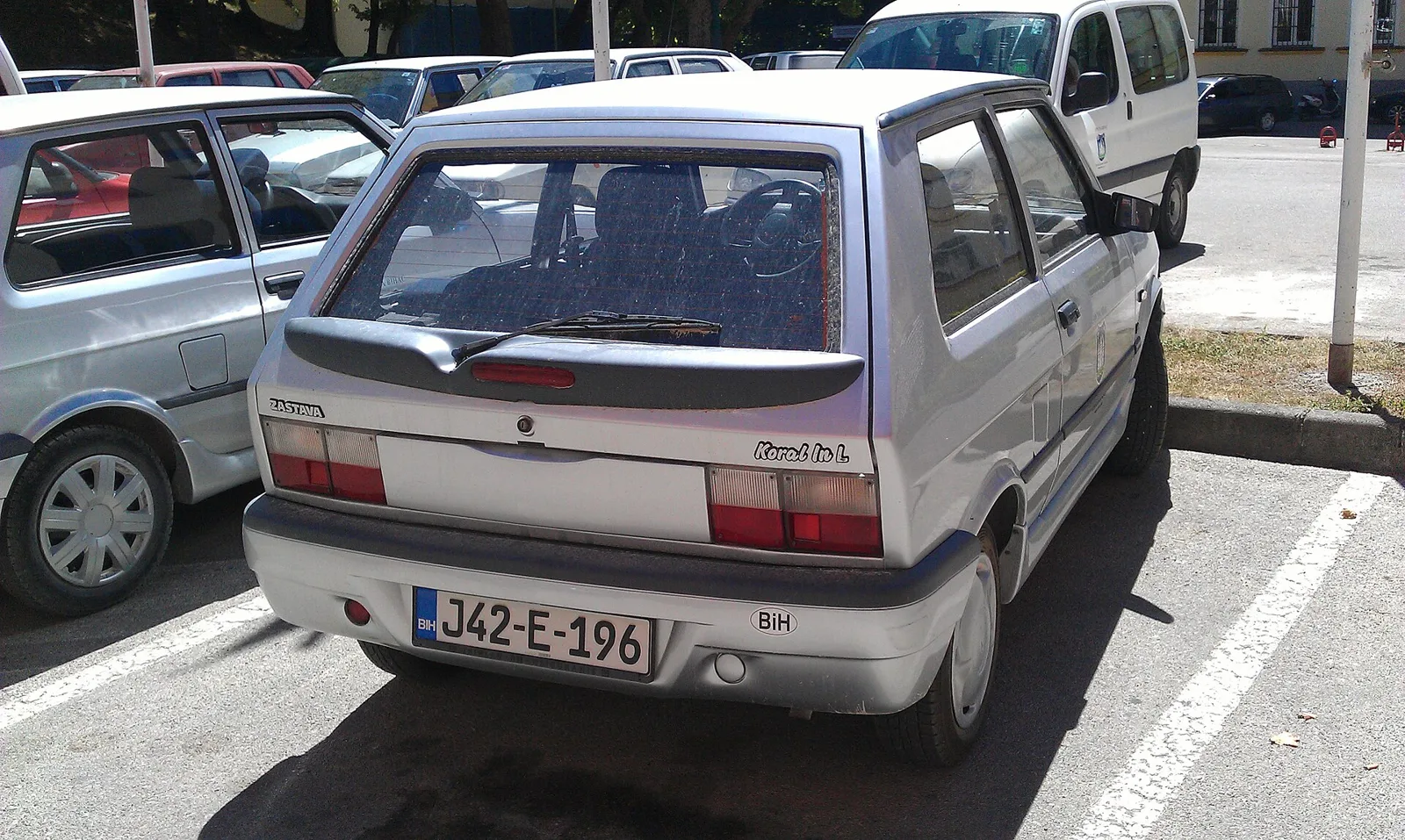
The Koral IN L used a Peugeot 1.1-litre engine with 60 PS (44 kW). It passed a TUV test for EU safety standards, which made it possible to import the car into EU countries.
How did the Yugo get to the United States?
The first three Yugos were shown at the Los Angeles Auto Show in May 1984. US marketing rights passed to Malcolm Bricklin's International Automobile Importers in November 1984 for $50,000, or $10 per car, after YugoCars Inc had been formed in Sun Valley, California.
YugoCars Inc had been set up by Miro Kefurt and Ray Burns to bring the Yugo 45 to America. The car was promoted with a ten-year, 100,000-mile (160,000 km) warranty and a launch price of $4,500, although the early US cars struggled at emissions testing.
Tony Ciminera's audit produced more than 500 changes for the US market, including compliance with American safety and emissions rules. The 1.1-litre Yugo 55 was the version that IAI preferred, but it was still the slowest car sold in the United States, with a top speed of 86 mph (138 km/h).
By mid-1986 Yugo America was selling the GV from $3,990. Five models were on sale in the 1987 model year, including the GVS, GVC, GVL and GVX, and the Cabrio convertible arrived in 1988.
What did the GVX and later GV models offer?
The sporty GVX used the 1.3-litre engine with a five-speed manual, along with a ground-effects package, alloy wheels and rally lights. Despite being billed as an upscale sporty version of the base GV, it reached 60 mph in 13.56 seconds, which was only slightly quicker than the basic car.
By 1990 the GV and GVL gave way to a 1.3-litre overhead-cam engine with a five-speed manual or a Renault-designed three-speed automatic. An air conditioner became an option on the GVX, and the standard model became the GV Plus.
The Cabrio convertible, introduced in 1988, had an electric roof and modified bumpers. It was usually fitted with a carburettor 1.1 or a fuel-injected 1.3 engine, and it was sold in the United States, Germany, Yugoslavia and Greece.
How many Yugos did American buyers take?
Between 1985 and 1992 American buyers took 141,651 Yugos. Sales peaked at 48,812 in 1987 and fell to 1,412 in 1992, a collapse that followed a recall Yugo America could not absorb. The importer folded in April 1992.
The sales pitch leaned on price. Advertising promised that everybody needs a Yugo sometime, and the 39-90 campaign played on the $3,990 price. The car was sold as a cheap new car, and as a reliable second car for wealthier buyers.
The EPA recall of over 126,000 vehicles in 1990 was the turning point. The fuel-injected GVX arrived too late to repair the image, and the original emissions system relied on an outdated carburettor and a two-way catalytic converter.
Yugo America's whole run was short. It began with the first US cars in 1985, reached its strongest year in 1987 and ended with the company's collapse in 1992. In that period the Yugo became a symbol of the cheap import that cut corners, and the phrase stuck long after the cars had gone.
Why did the Yugo become a byword for bad cars?
Critics pointed to its Fiat-derived design, build quality and reliability. Car Talk voted it the worst car of the millennium, and Time listed the Yugo GV among its 50 Worst Cars of All Time. Complex Magazine ranked the Yugo 45 number one of the worst cars of the 1980s.
Not every review was harsh. Popular Science in May 1987 found the Yugo the best performer in the braking tests, though it criticised the car's poor acceleration and noise. The ride was described as choppy even on smooth roads.
Owners were divided. A Popular Mechanics survey in 1987 found that only 42.4% would buy a Yugo again, and 57.2% reported mechanical troubles. A serious problem was maintenance: the timing belt on the 55 and 65 models needed replacing every 40,000 miles (64,000 km), and many owners ignored the advice.
What happened to Zastava in the 1990s?
Political upheaval in the early 1990s disrupted parts supplies, and UN sanctions forced Zastava to withdraw the car from its export markets. Production fell to 14,000 in 1992, then to 7,000 in 1993 and 1994, before recovering to 9,000 in 1995.
Production was rebuilt slowly. Zastava also made the Zastava 10, a Fiat Punto built under an agreement from October 2003, which was aimed at Eastern European markets. The Yugo's own final chapter was quieter, and it stayed in production as a cheap, familiar car.
Production ended on 11 November 2008 with the 794,428th car, and around 250,000 Yugos had been exported over the years.
What did the later Yugo models change?
Later cars gained central locking, electric windows, alloy wheels and an optional Renault-designed three-speed automatic, as the Koral IN facelift arrived near the end of production. The 1991 dashboard redesign came with the GVX and the European model.
Earlier cars were simpler. The 1980 to 1985 models had opening vent windows and a single tail light on each side, while from around 1985 they received better seats, two-part tail lights and a rear defroster.
Did Malcolm Bricklin bring the Yugo back?
Bricklin returned in 2002 with a deal to bring the Yugo back to the United States under a model tentatively called the ZMW. The company expected to sell 60,000 cars in 2003, but Bricklin turned instead to Chery cars from China, a venture that folded in 2006.
By 2021, 408 Yugos were still in service in the United States, partly because sanctions had limited the supply of spare parts and service locations. Those figures show how a small import could outlast its importer.
How did the Yugo sell in Britain?
Zastava Cars Limited set up its British headquarters in Reading, Berkshire, in 1981. The company first sold 1100 and 1300 series cars with Fiat 128 roots, before the range was rebranded as Yugo models and the Zastava name was pushed into the small print.
Exports of the Stojadin to the UK stopped in 1991, and the Florida, sold in Britain as the Sana, arrived in 1990 with positive early reviews. Supplies then dwindled, and the British company folded in 1993 after UN sanctions.
As of 2022, 14 Yugos were still on UK roads, which makes the car a rare sight in Britain today. British reviews were rarely more than lukewarm, even when they avoided the harshest criticism.
Yugo range at a glance
The table lists the main engine variants and the US-market figures that the record provides. Power is shown in the form used at the time, and the mileage figure is the predicted value for the early US car.
| Model | Engine | Power or performance |
|---|---|---|
| Yugo 45 (Koral 1.0) | 903 cc economy unit | 45 hp (33 kW) |
| Yugo 55 (Koral 1.1) | 1.1 L from the Zastava 101, carburettor | 55 hp; US top speed 86 mph (138 km/h) |
| Yugo 65 (Koral 1.3) | 1.3 L, Weber twin-barrel carburettor | 65 hp |
| Koral IN L | Peugeot 1.1 L | 60 PS (44 kW) |
| Yugo GVX (US) | 1.3 L | 0-60 mph in 13.56 seconds |
| Predicted US fuel economy | Yugo 45 with 903 cc engine | 42 to 45 mpg-US (5.6 to 5.2 L/100 km) |
| Total production | All variants | More than 794,000 cars, 1980 to 2008 |
How is the Yugo remembered in popular culture?
In the former Yugoslav countries the car became a symbol of simplicity, cheap repairs and self-reliance, with owners fixing their own cars. In the United States it became a joke, and it stood in as a byword for a lemon.
Films and television picked up the joke. A rusty beige Yugo GV appeared in Die Hard with a Vengeance, and a Yugo served as an unmarked police car in the 1987 film Dragnet. In Cars 2 from 2011, Yugos, called Hugos, were members of a criminal group of lemon cars, and a 2008 Metallica video featured one.
Cult status followed in the car's home markets. Restored Yugos now feature at rallies in Serbia, and Serbian enthusiasts in their twenties collect and refit them. Almost 60,000 were still in use in Serbia about four years after production ended.
Frequently asked questions
Was the Yugo based on a Fiat?
Yes. Zastava designed the Yugo as a shortened version of the Fiat 128, and the company had built Fiat designs under licence since 1953.
How many Yugos were built?
More than 794,000 were built between 1980 and 2008, and around 250,000 of them were exported.
Was the Yugo sold in China?
Yes. 500 Yugos were exported to China in early 1985, an early step in the car's export drive.
Is the Yugo the worst car ever made?
Critics have often said so, and Car Talk named it the worst car of the millennium. Owners were more divided, with 42.4% saying in a 1987 survey that they would buy another Yugo.