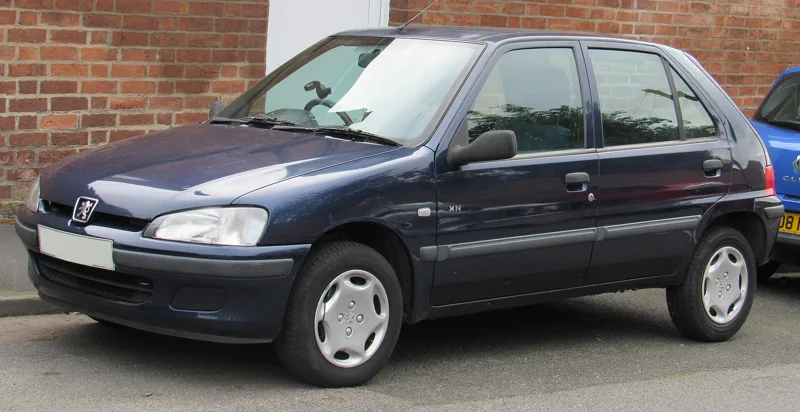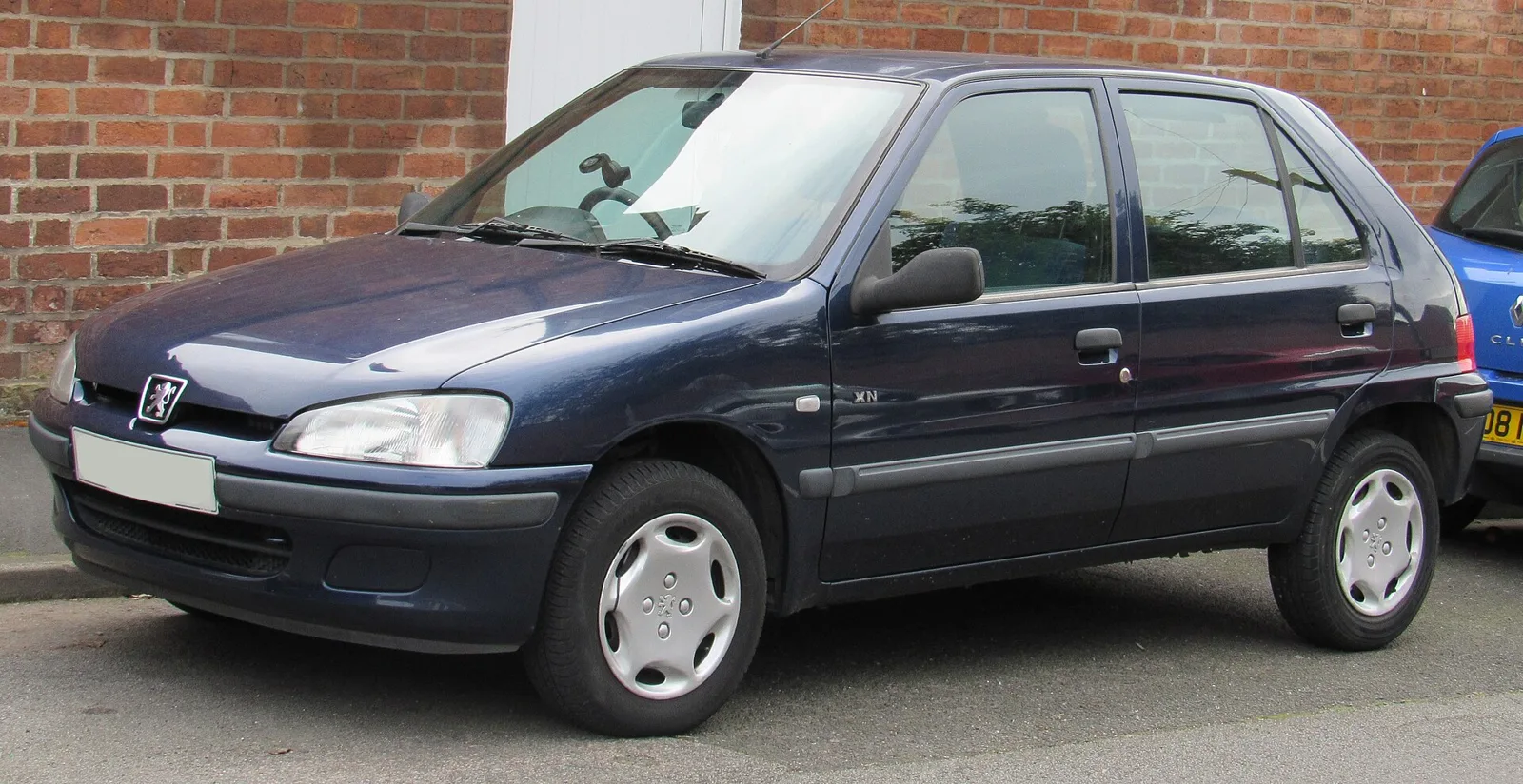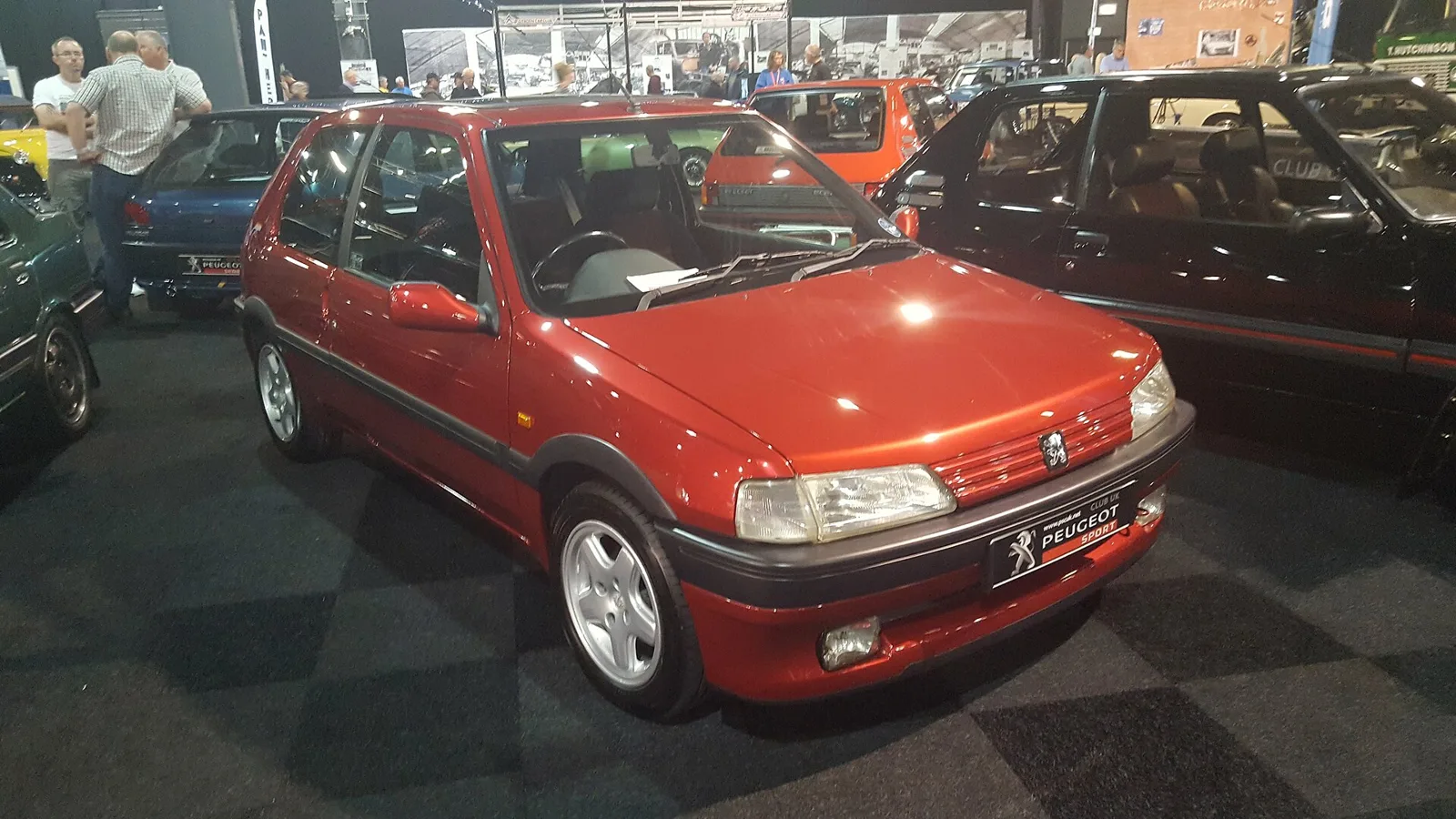
A light, sporty small Peugeot from 1991 that was sold as a cheaper route into performance, with a 1,587 cc engine and a special Le Mans edition.
The Peugeot 106 XSI was a small sporty car sold from September 1991 with a 1,360 cc engine rated at 98 PS, later joined by a 1,587 cc 103 PS version. It was a cheaper alternative to the 205 GTI and came with a special Le Mans edition.
Peugeot's sporting small car went on sale in September 1991 under the name XSi, after the team had first planned to call it XTi. It was pitched as a cheaper route into performance than the 205 GTI, and it ran for almost five years in the 106 range.
Why was the car called XSi rather than GTi?
Peugeot wanted to move away from the GTi name, which it felt had become outdated, even though that badge had earned the car a strong following among young buyers who wanted a small sports car. The XSi name was chosen for sale, and the car was meant to make people forget the older badge.
Early cars were sparsely equipped, with no electric windows and no power steering as standard. Peugeot aimed the car at loyal customers who did not want to spend as much as they would on the 205 GTI, but who still wanted something more modern in looks and engineering.
Light, well geared and well held on the road, the 106 XSI still holds its own against many of its contemporaries.
How did the 106 XSI differ from the ordinary 106?
The XSI had its own body treatment. The front bumper carried a lower air dam and long-range lights, which were yellow at first and changed to white in 1993. It also had 14-inch aluminium wheels, a rear spoiler and side mouldings with wheel-arch extensions, so it was easy to tell apart from the rest of the range.
Inside, the semi-bucket seats in Serval or Ouragan fabric gave good support. The equipment, however, looked thin for a top-of-the-range car of its day. A rev counter, a temperature and oil gauge and a three-spoke steering wheel trimmed in leather made up the standard kit.
What engines did the Peugeot 106 XSI use?
The first cars used a 1,360 cc engine from the TU family, which PSA had launched in 1987 as an evolution of the older XU engines. Peugeot quoted 98 PS DIN at 6,800 rpm, with 122 N m of torque at 4,200 rpm. The engine was tilted 6 degrees forward, with its exhaust manifold at the front and the intake at the rear.
To reach the performance target, Peugeot made several changes to the basic 75 PS unit:
- Multipoint injection with a specific intake manifold
- A compression ratio raised to 9.9:1 through domed pistons
- A revised camshaft profile with more valve lift and longer opening periods
- Larger valves, with intake at 39.1 mm and exhaust at 31 mm
- A slightly wider exhaust line
In May 1994 the XSi received a new 1,587 cc engine with Magneti Marelli 8P multipoint injection. It produced 103 PS DIN at 6,200 rpm and 135 N m at 3,500 rpm, and its compression ratio rose to 10.2:1, which made it easier to use across the rev range.
How fast was the Peugeot 106 XSI?
The 98 PS car ran from 0 to 100 km/h in 9.2 seconds and reached 190 km/h. The 94 PS version was only a little slower at 9.9 seconds, and the 103 PS car from 1994 managed the sprint in 9.3 seconds, with a top speed of 195 km/h.
The standing-start kilometre was covered in 31.4 seconds by the 98 PS car, in 31.8 seconds by the 94 PS version and in 30.8 seconds by the 1,587 cc model. Its weight of 840 to 860 kg and a gearbox with short, well-designed ratios gave the car very respectable performance.
The performance is admittedly modest. Even so, given the sound insulation typical of a car of its age, weight and engine type, the on-board sensations were not lacking.
How did the 106 XSI handle on the road?
The chassis lived up to the marque's reputation for effectiveness. The front used MacPherson-type struts with a 22 mm anti-roll bar, and the rear used trailing arms with transverse torsion bars and a 24 mm anti-roll bar. The steering was a little too direct, but it caused no real problem even without power assistance.
The rear end was described as playful yet very safe. Lifting off in a corner needed care because the car tended to oversteer slightly. Roadholding was very good, with progressive reactions. The brakes, with ventilated front discs of 247 mm and rear drums of 180 mm, were a little weak, particularly on the 1,587 cc version, and could lack endurance.
Was the Le Mans edition a different car?
The Le Mans edition was built in 1,000 examples, 300 of them reserved for France, and it was available only in Lucifer red. It had Le Mans logos, one of them at the rear in place of the XSI badge, and a Peugeot 905 monogram on each door. The vehicle number was written on the front left door.
The grille carried a tricolour PTS flame, each side moulding was edged with an aluminium-coloured strip, and a black lip was added to the front spoiler. Two rear headrests completed the list of changes.
Did the 1993 emissions changes hurt the car?
Not by much. In 1993 Peugeot lowered the output of the 1,360 cc engine to 94 PS DIN, a figure reached at 6,600 rpm, with torque falling to 117 N m, so the car could meet new anti-pollution standards. The change did not seriously harm performance, and 94 PS cars were already on sale before January 1993, with a discount of 1,000 francs at that time.
Peugeot seems to have wanted a more flexible engine, and the 1,587 cc unit was the result. Its larger capacity and higher compression ratio made it more usable over a broad range of engine speeds, which was exactly what the 1,360 cc unit had lacked below about 4,000 rpm.
What colours and equipment did the 106 XSI come in?
The available colours were anthracite grey, magnum grey, meige white, miami blue, vallelunga red, lucifer red and onyx black. Standard kit included tinted glass, rear side windows that opened outward, long-range lights, 14-inch alloy wheels, remote central locking, a sports seat and a card reader.
Electric window lifters came as standard except in the first months of production. For tax purposes the cars were rated at 7 and 8 CV, and they ran on tubeless radial-ply tyres sized 175/60-14 79H.
Which options and equipment did buyers add?
Options varied by model year and version. The main options were anti-lock brakes, air conditioning, power steering, a sunroof, electric windows and Lucifer red paint. The 94 PS cars on sale before January 1993 carried a discount of 1,000 francs at that time.
How reliable is a Peugeot 106 XSI today?
The engines are considered extremely reliable, in the same way as the other TU and XU units. Many cars have covered 250,000 km without any particular problem, and high-mileage examples may need the cylinder head and all the engine gaskets overhauled. The 1,360 cc engines do have cylinder head gaskets that can be fragile, and they can show jerky running, especially when cold.
The gearbox can feel snatchy as the synchromesh wears, the rear bearings need replacing on time, and the car has a certain tendency to overheat, apparently because the radiator volume is too small. Keeping to the service intervals and dealing with these weak points early is the usual advice.
Owners who followed that routine could expect the car to remain dependable, and the known faults were usually manageable rather than serious.
Is a used 106 XSI still worth buying?
As of May 2012, buying one on the used market seemed difficult, because many had been modified for personalisation or have high mileage. The car is described as a victim of its own qualities: reliability, a very good price for the performance, and low upkeep. A well-kept car is still a good bargain for anyone who wants an older driving experience on a small budget.
Restoring one for preservation, leaving paintwork aside, means a few hundred euros for most engine gaskets, filters, fluids, probes and other sensors. The car's combination of low weight, a well-spaced gearbox and good roadholding is what keeps it appealing.