From a Zhiguli club rally to two FIA European Rally Championship titles, with Russian and Estonian crowns along the way.
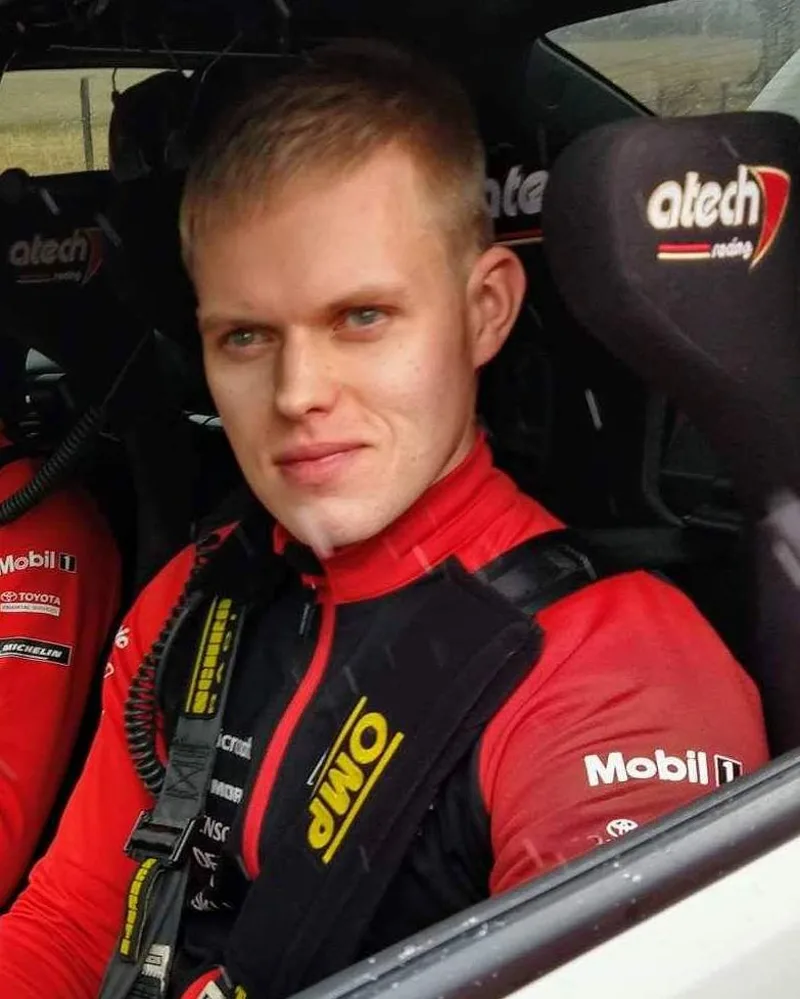
Alexey Lukyanuk is a Russian rally driver, born in Moscow on 12 December 1980 and based in Cyprus. He won the FIA European Rally Championship in 2018 and again in 2020. He also took overall titles in Russia and Estonia in 2014.
Who is Alexey Lukyanuk?
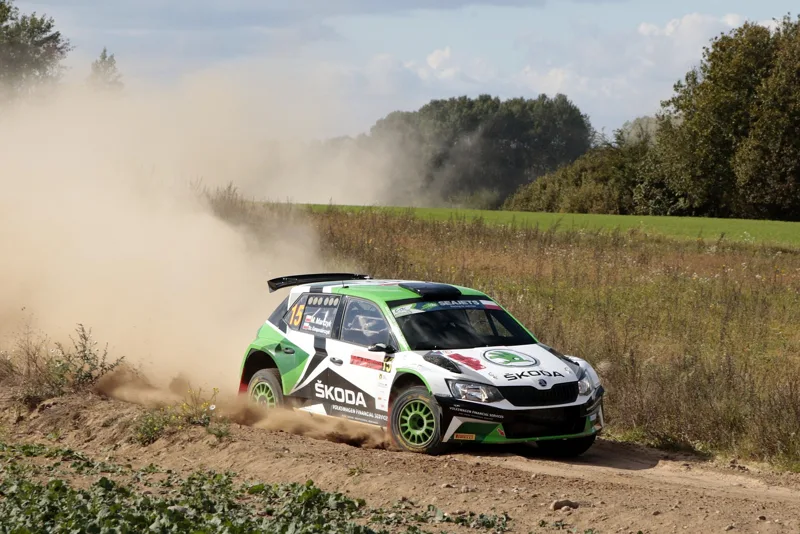
Alexey Lukyanuk is a Russian rally driver who is based in Cyprus. He is a two-time FIA European Rally Champion, with titles in 2018 and 2020, and he has won Rally Islas Canarias three times. He has also built a lasting record in the Baltic events.
Born in Moscow on 12 December 1980, he built his reputation through the Russian and Baltic rally scenes before moving onto the European stage. He is also the overall champion of both Russia and Estonia.
His record of Colin McRae Flat Out Trophy awards stands out. Nine of them are credited to him, a total no other driver is recorded as reaching.
A rally career that started with a Zhiguli and ended with two FIA European crowns, built on a long run of Baltic results.
How did his rallying career begin?
Rallying began for him in 2005. The first car was a Zhiguli VAZ 2105, which he drove at a club rally in Staraya Shuya. Early on he entered only two or three events a year, and he often retired for technical reasons even when his pace drew attention from rivals.
A larger and more powerful machine followed in the shape of an Opel Astra GSI. It was fast, but it suffered reliability problems that kept cutting short his results.
In 2009 he met his co-driver, Aleksey Arnautov, a partnership that produced their first major successes. In December the crew won the Rally Svetogorsk-2009, their first major success together.
How did the 2010 Russia Cup season unfold?
In 2010 Lukyanuk and Arnautov contested the Russia Cup in the Opel Astra GSI. The early rounds were hard going. At Yakkima the Opel's engine exploded on the first special stage, and at Golubye Ozera the same kind of problem struck again.
Vyborg ended in a dramatic accident after a small error in the route plan, and the car hit the trees. The crew was not injured, and the damage was not serious enough to take a long time to repair. The Saint Petersburg round, by contrast, produced a third-place finish overall in the Opel.
Many crews running four-wheel-drive cars were unhappy with their own performances that weekend, and the result was a useful sign that the car could compete at the top of the field when it was healthy.
How did the 2011 Russia Cup go?
The 2011 season was a second attempt at the title. Lukyanuk and Arnautov won the category at Strugi Krasnye Winter, Yakkima and Golubye Ozera, showing consistent pace in the early rounds of the series. Those early category wins mattered for the points table.
Summer brought setbacks. The drive gear failed at Strugi Krasnye Summer, and the gearbox problems returned at Vyborg. At Rostov Veliky the surface was a working open-cut mine, and even good Ohlins dampers could not cope with the road, so the crew retired again.
The Saint Petersburg round went much better. The crew took first in category and third overall, which kept them in contention for the title. At Pskov a new engine failure ended the day, but the crew arrived at the final round with the maximum 80 points available.
Why did the 2011 Tuapse finale matter?
Tuapse was the decisive round. Lukyanuk and Arnautov had 80 points, while their closest rival, Irek Dautov, had only 60. A finish would be enough to win the title, but the car let them down early on the road to scrutineering when the flywheel came loose.
Mechanics drove through the night to Krasnodar, sourced spare parts and got the car ready to start, but a substandard clutch was found. They opted to withdraw on day one, switching to a Superally because a time penalty mattered little at that point.
The second day was run in heavy rain, which turned the mountain roads into a mix of water and stones. Dautov retired on the first day with a gearbox problem and then finished third overall. Lukyanuk's car broke its gearbox on a steep descent, but the 2011 title still went to the crew, who won the 2000N category of the Russia Cup.
How did he approach Estonia and the Baltic events in 2011?
Alongside the Russian rounds, the crew raced abroad in Estonia, a country with strong rally traditions and close competition in every category. Few crews from Russia had produced high results in the Baltics before, but Lukyanuk showed early promise. Those rounds set up his later results in the country.
At Tallinn the crew retired with gearbox trouble, although they were among the leaders in the E10 class for two-litre cars. At Otepaa, a round that came close to European Championship level, a broken drive gear ended their hopes after a strong run.
The season finale at Rally Saaremaa was unexpected. With support from businessman Vadim Kuznetsov, Lukyanuk took the wheel of a four-wheel-drive Mitsubishi Lancer Evo 7, finishing fifth overall.
What happened in his 2012 Estonian season?
The 2012 campaign was run in the Estonian Rally Championship. It began with a first place in category and seventh overall at Virumaa, followed by a result at Madona that gave him first in category and fifth overall. The Saaremaa win was the highlight of that year.
Rally Tallinn was not on the Estonian calendar that year, but it proved very successful. Lukyanuk and Arnautov took the overall victory. Rally Estonia was the most important race of the year, in which the crew drove a Lancer Evo 9 prepared by ASRT. They were only 3.4 seconds behind category leader Kaspar Koitla when the rear drive broke, and they finished the last two stages on three wheels.
Even on three wheels they secured second in category and seventh overall. The top five places at that event were occupied by WRC and S2000 cars, which underlined how strong the result was.
Rally Viru turned into a setback. The crew won the event outright, but the technical committee found a defect in the car's preparation, because it lacked a catalyst. Under the rules that round counted toward the overall standings, so the result was cancelled and the championship score was affected as well.
Rally Kurzeme in Latvia brought a retirement after the clutch mechanism broke on the final section. At Mulgi, running the Lancer Evo 10 in R4, the crew led the race before slipping into a deep drain. Spectators helped push the car back onto the road, and the crew still took first in category, but they finished 33rd overall.
The season closed at Rally Saaremaa. The crew had debuted there in four-wheel drive in 2011, and in 2012 they won the event overall. It was the first time a Russian crew had taken the overall win at Saaremaa.
How did 2013 go in Latvia and Estonia?
In 2013 the businessman Vadim Kuznetsov and the ASRT team entered Lukyanuk for the whole year in the Estonian and Latvian championships, driving a Lancer Evo X in the N4 category. The year mixed heavy setbacks with strong finishes. Several rounds ended in damage or retirement.
The Liepaja-Ventspils round carried ERC status, and because of its length it was run as two Latvian rounds. Across the opening two days the crew was excellent, taking first in the Latvian round by a margin of 1.5 minutes and third in the ERC standings on day results.
On the morning of the third day the fight with Francois Delecour continued, but damage could not be repaired with the limited service on offer. The oil cooler was hit at SS-14, and the crew retired. Even so, the event earned Lukyanuk the Colin McRae Flat Out Trophy, which goes to drivers who show outstanding results and fight for victory to the end.
Viru went badly. The crew led early on, but on SS-5, travelling fast, the right rear wheel failed and took the differential pump with it. They could only finish 12th in category.
Rally Tallinn was a close battle with Ott Tanak, who had returned to the championship after time with the Ford works team in the WRC. The fight ended with Tanak 0.6 seconds ahead, and the crew took second in category and third overall.
At Rally Talsi he won four of the twelve stages and led after SS-6, despite WRC cars in the field. A bad jump on the final stage dropped him to 12th overall, though he finished fifth in category.
After the Viru crash there was no time to construct a replacement, so they rented the ex-Siim Plangi Lancer Evo 9 for Rally Estonia. He set a strong pace in the unfamiliar car and drove to a third-place podium behind only WRC and S2000 machinery. That result put the crew first in the Latvian Championship and second in the Estonian one.
Did he compete in the World Rally Championship?
In 2013 he took part in a WRC round, the Neste Oil Rally in Finland, known for fast roads and jumps. The crew adjusted quickly and set the eighth-fastest time on the spectator stage. That single WRC round stands out in an otherwise Baltic and Russian record.
Going into the third day he ran 12th overall, holding a cushion of ten minutes over the closest rival in his class. A puncture at Ouninpohja dropped him to 16th overall, though he kept the lead in Class 3.
How did the 2014 Russian championship go?
The Russian Rally Championship of 2014 brought a run of wins and near misses. At Gorny Len the crew picked up a four-minute penalty for a co-driver's error, which took away the chance of a top result. They finished second in category and third overall.
At Karelia the win that had been long expected finally came, and the White Nights Rally also went to the crew from Saint Petersburg. At South Urals they were forced to drive without working brakes after a damaged brake pipe, yet they still finished second in category and third overall.
Rally Predgorya Kavkaza was fast and aggressive, and Lukyanuk kept his fans engaged even after the retirement of several main rivals. The title was settled at Rally Kuban, where the splendid victory made the crew Russian champions.
What did he achieve in Estonia in 2014?
The 2014 Estonian Championship was just as productive. At Rally Harju, a new race near Tallinn, Lukyanuk was the first overall winner, and rivals driving bigger-engined cars could not reel him in. The Estonian title that year was a major step.
At Rally Viru he fought a tough battle with Timu Kyrge for most of the event, and the Estonian victory went to a higher class car. Lukyanuk still secured the N4 category victory by a wide margin. Rally Estonia that year counted as a European Championship round, so the crew entered and gained a convincing category win and second place in the ERC standings for the round.
Rally Kurzeme brought an overall win, with Kyrge absent from the event. Rally Tartu brought another convincing overall win and the Estonian N4 title.
Rally Saaremaa stands as the signature event for drivers from the region, and that year 147 crews were entered. Lukyanuk could have taken the overall Estonian title as well as the N4 crown, so he drove with care. Rain made parts of the surface slippery, and a rollover at SS-10 cost the crew ten seconds and second place. They finished third overall and second in category, but the overall Estonian championship was theirs, making Lukyanuk the first Russian to win it.
What does his European Rally Championship record show?
| Season | Championship or event | Result |
|---|---|---|
| 2010 | Russia Cup, Opel Astra GSI | Third overall at Saint Petersburg |
| 2011 | Russia Cup | Russia Rally Cup 2000N category title |
| 2011 | Rally Saaremaa | Fifth overall |
| 2012 | Estonian Rally Championship | Rally Tallinn overall win, Rally Saaremaa overall win |
| 2013 | Latvian and Estonian championships | First in the Latvian round at Liepaja-Ventspils |
| 2013 | WRC Rally Finland | First in Class 3 |
| 2014 | Russian Rally Championship | Overall champion |
| 2014 | Estonian Rally Championship | Overall champion |
| 2015 | European Rally Championship | Third overall, 157 points |
| 2018 | European Rally Championship | Champion |
| 2020 | European Rally Championship | Champion |
What is his legacy in rallying?
Lukyanuk's legacy rests on two European Rally Championship titles, overall championships in Russia and Estonia, and a long list of Baltic wins. He also holds Colin McRae Flat Out Trophy awards for outstanding performances in a number of rounds. The record speaks for itself across several seasons.
The results show that a crew from Russia could compete at the top of the Baltic and European scene. The records of the Saaremaa and Estonian rounds make that case clearly.