The eighth-generation 3 Series, coded G50, has entered series production in Bavaria with combustion engines, while the electric i3 is built in Munich.
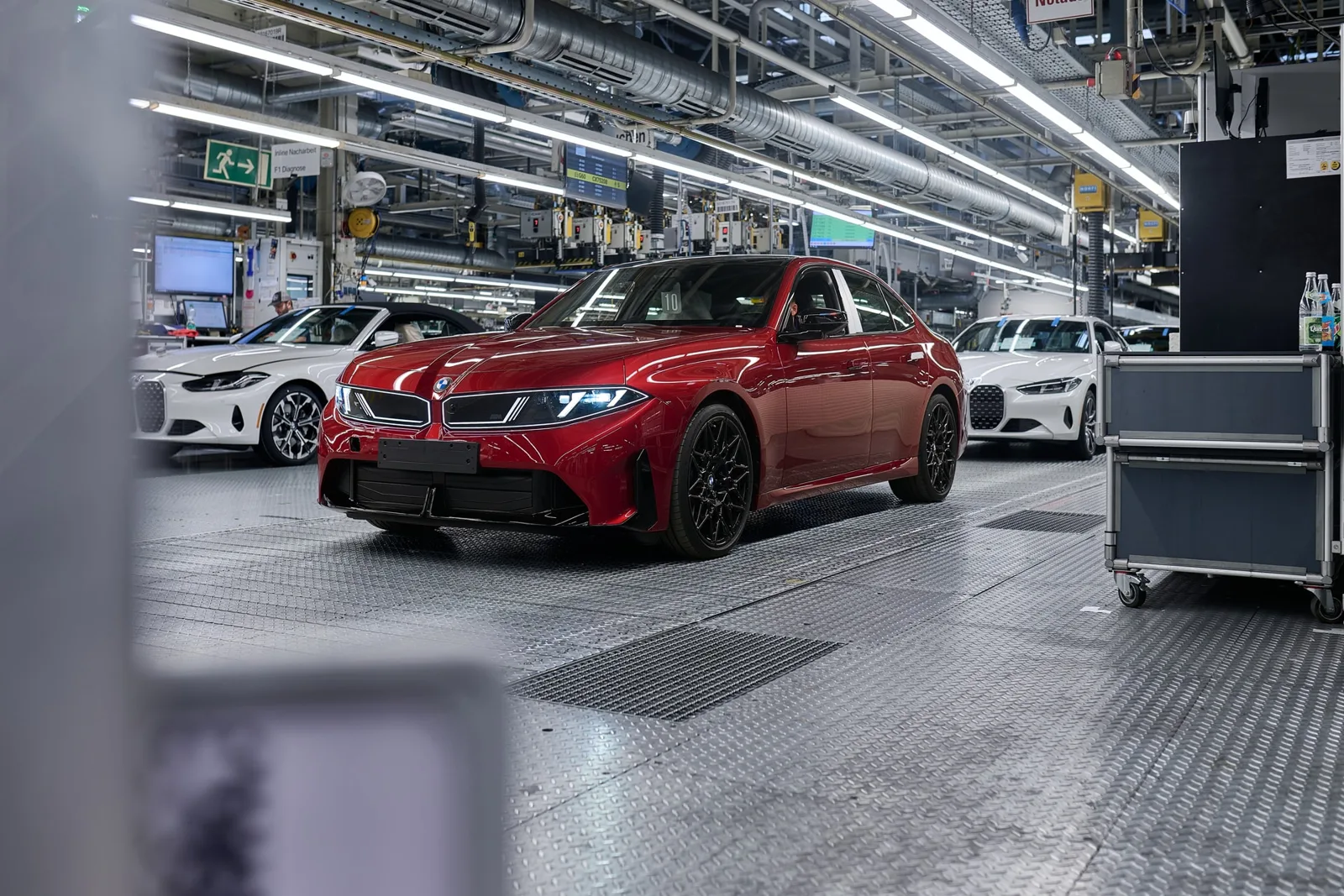
BMW Group began series production of the eighth-generation 3 Series Sedan at Plant Dingolfing, Germany, in the week of 3 November 2026. The car carries combustion engines, with plug-in hybrids following in 2027, and market launch starts in stages from the first quarter of 2027.
The new BMW 3 Series has gone into series production. BMW Group announced on 3 November that the eighth-generation Sedan, known internally as the G50, is now being built at Plant Dingolfing, with combustion engines first and plug-in hybrid versions to follow in 2027.
It is a homecoming of sorts. The first 3 Series, the E21, was assembled at Dingolfing from 1980, and several generations of the Sedan were built there until 2004. The plant also produced the 3 Series Gran Turismo between 2013 and 2021. In all, more than 1.15 million 3 Series cars have left its line. Worldwide, BMW says it has sold around 18 million examples since the model arrived in 1975.
Two plants, two powertrain families
The company is splitting the new generation between two German factories. Plant Munich builds the all-electric i3, while Dingolfing handles the combustion and, later, plug-in hybrid Sedans. BMW describes this as a technology-open approach that lets it meet different customer needs, and says around one billion euros has gone into developing the two sites for the job.
The car takes on the design language of the Neue Klasse and several of its key technologies. These include Panoramic iDrive, a new electrical and electronic architecture and new driver assistance systems.
How it is built
In assembly hall 50 the new Sedan shares one line with the 4 Series and 5 Series. The equipment is designed to take different powertrain variants without a change of layout. Paint shop and assembly mostly use existing lines, with changes concentrated on the Neue Klasse features, notably the cockpit pre-assembly that Panoramic iDrive requires.
The body shop is the big change. A new powertrain-neutral line has been installed inside the existing building, and about a third of the roughly 750 robots there were moved over from other facilities. BMW also points to automatic best-fit adjustment of doors and closures, and automated surface inspection. Around 250 Smart Transport Robots, together with automated forklifts and Splitbots, now handle goods arriving at the plant and the supply of parts to the line.
Plant Landshut supplies crankcases and cylinder heads for four- and six-cylinder engines, plus the propeller shaft. It also makes interior parts, including the instrument panel with its glove compartment. A new integrated light box in the cockpit backlights a range of surface materials, and BMW says this feature went from pre-development to series production at Landshut.
The factory and what comes next
- Dingolfing is BMW Group's largest European production site, with around 18,000 employees and approximately 950 apprentices.
- It turns out around 1,350 vehicles per day, from the 4 Series, 5 Series and 7 Series to the iX, BMW M cars and the 7 Series Protection.
- The start of production opens the ramp-up for the new generation.
Market launch will happen in stages from the first quarter of 2027. BMW Group says it plans to put around 40 new or updated models with Neue Klasse technologies on the road by the end of 2027.